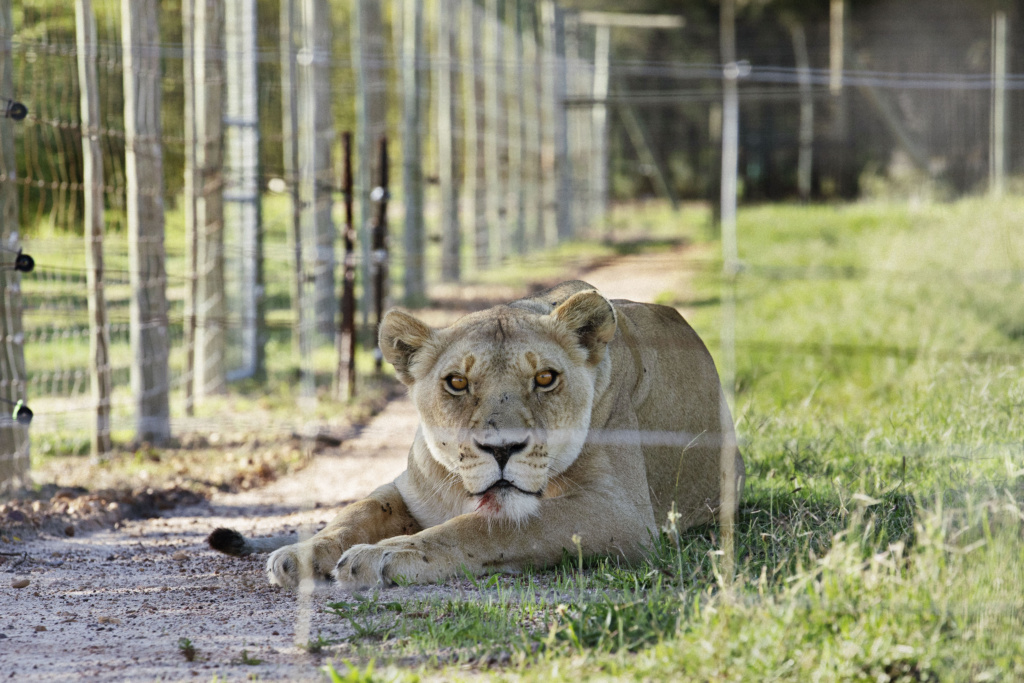

Lion and Lines
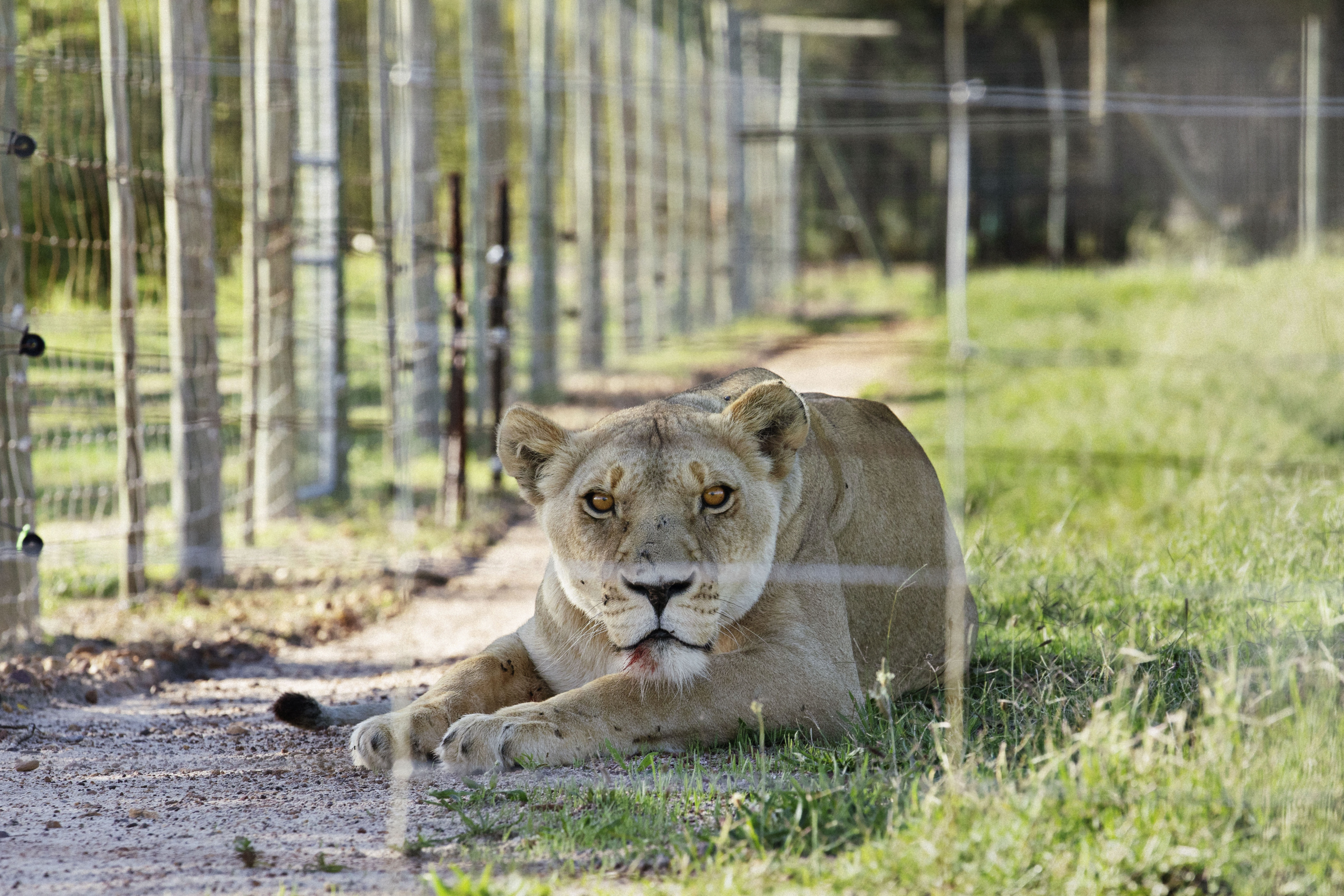
Bloody Mouth
| Medium | Photograhy Inkjet on Photo Lustre |
| Dimensions | 60” X 40" |
| Edition Size | 5 |
| Value | $7,500 |
Story of this Series
+
Drakenstein Lion Park in Paarl, South Africa was established in 1998 as a safe haven for lions rescued from zoos, sanctuaries, circuses and roadside attractions around the world. At the entrance is a sign: “Zero tolerance for harassing the animals…That includes whistling or making any sounds to get the animals’s attention.” It is an uncommon declaration given the common practice of making noise to get a captive animal to acknowledge a free human. This place was quite clearly not a “scamtuary.” I went there every week for the better part of a year and sat in the same spot in front of an enclosure for anywhere between three and eleven hours in order to study lion behaviour. At the end of each session, as a reward for the discipline of observation, I would photograph the animals. In nature film-making there is a common cinematic grammar, “Show this. Don’t show that.” Those words signify a tension that exists between how an animal is represented, and how it lives its life. As a director, I was frequently instructed to downplay the visible signs of human intervention that make encounters with captive animals possible in the first place. The presence of producers, animal wranglers, property managers, marketers — all the human labor behind the scenes — is typically reduced to a passing mention, if acknowledged at all. And the most conspicuous symbol of captivity, the fence, is often deliberately kept out of frame — a quiet yet powerful marker of constraint that rarely makes it to the screen. All of the lions in this series live within doubly-fenced and electrified enclosures yet most of the photographs I found myself developing, ignored that fact. Very few people can afford the chance to see a lion in the wild. For most, it is the fence that enables this encounter — a boundary that makes it possible for humans and lions to gaze at one another. But the fence is not just a physical divider; it actively shapes the animal’s relationship to its environment. Watering stations are located next to the fence drawing lions near for the benefit of paying visitors. Food is delivered there. In this way, the fence transforms the lion into a spectacle, curated for human consumption. Its absence, on the other hand, risks a different illusion — the false impression that the lion roams freely in a truly wild landscape. Does a photograph without fencing make life any better for the animal? Does it provoke any kind of serious challenge to the systems that make these images possible? Sitting on a couch consuming animal images like popcorn while dreaming about how nice it would be to be able to see the animal in beautifully depicted wild places, becomes less likely if one is looking at an image with explicit reference to fencing. And while these photographs might not immediately read as a call-to-action, my hope is that this type of